
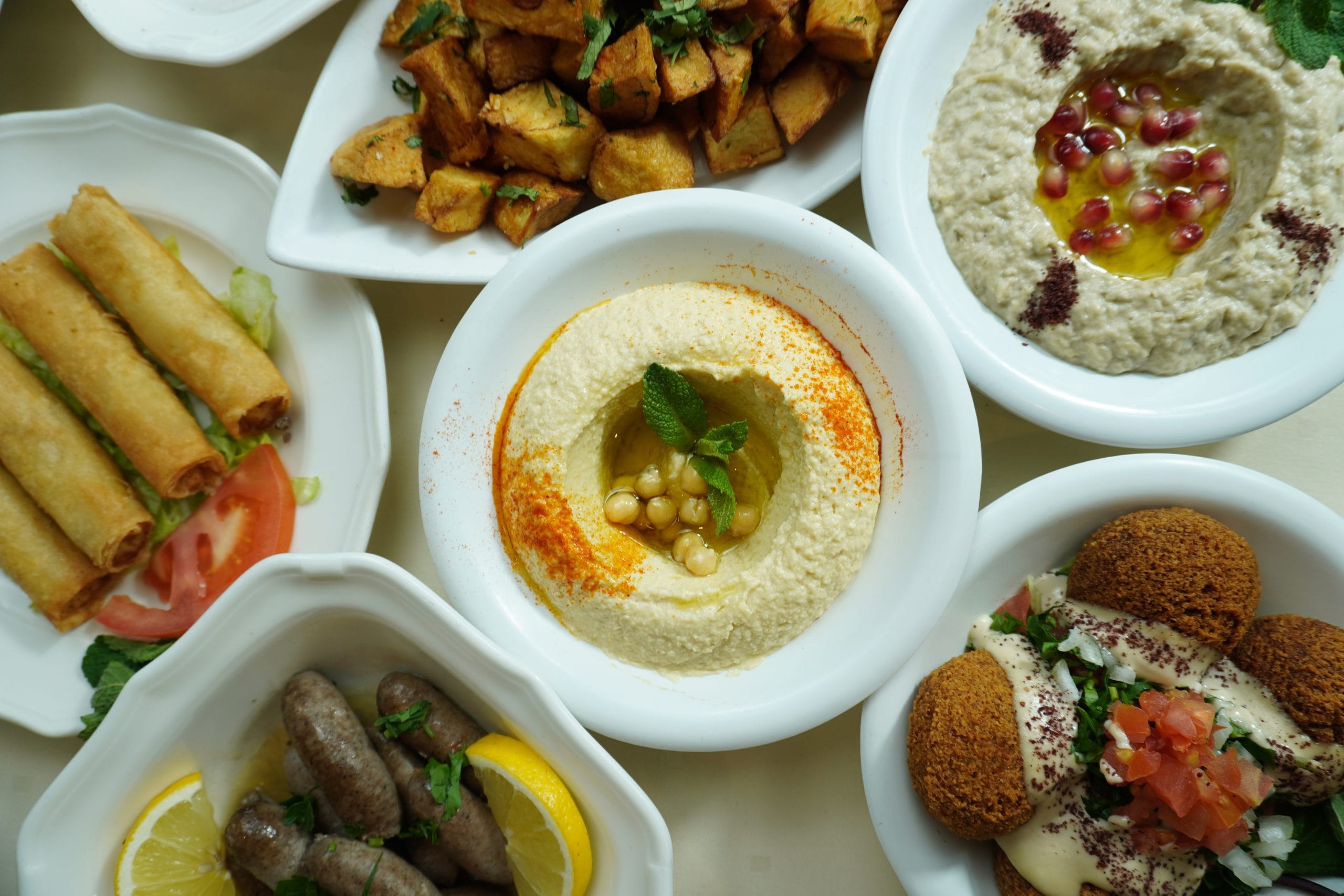
In Lebanon, a meal isn’t always served as a single plate in front of each guest. Instead, it is shared, discovered and enjoyed around a selection of small dishes placed at the centre of the table.
That is the very essence of mezze: a succession of hot and cold dishes that everyone tastes, discusses and passes around. The bread is shared, plates move from one person to the next, someone asks, “Want to try this?” — and the conversation carries on between bites. A Lebanese table is rarely one where everyone eats in their own corner. It is a table filled with plates, conversation and people who are happy to stay “just five more minutes.”
At Fakra, this spirit is just as much a part of a weekday lunch as it is of a large family gathering. But when discovering Lebanese cuisine, two questions always come up: what should you order, and how much? Here is our guide to putting together a mezze without over- or under-ordering.
What Is Lebanese Mezze?
Mezze is a selection of small dishes typical of Lebanese cuisine, including both hot and cold preparations, with vegetarian and meat-based options. Unlike a traditional meal where everyone chooses their own main course, mezze is designed to be placed at the centre of the table and shared.
Hummus, moutabal, taboulé, labneh, vine leaves, falafel, sambousek, kebbeh… each dish brings a different texture, flavour and way of discovering Lebanese cuisine. That is precisely what makes mezze so well suited to meals with friends, family gatherings and large tables: no one has to choose just one dish — everyone gets to try a little of everything.
Mezze can be enjoyed as a meal in its own right or served before a main course, usually charcoal-grilled meats.
Cold & Hot Mezze: How to Build Your Table
A well-balanced mezze combines two different styles, served either almost simultaneously or in two closely spaced rounds.
Cold Mezze
These open the meal. They include creamy dips such as hummus, moutabal and labneh, salads such as taboulé and fattoush, as well as fresh preparations like vine leaves and kibbeh nayyeh. They set the tone with fresh, lemony and herb-forward flavours.
Hot Mezze
These follow, bringing contrast to the table: crispy falafel, sambousek and fatayer, fried kebbeh, foul and small portions of shawarma. Fried or grilled, they add warmth to the meal and are perfect for enjoying with the sauces and dips from the cold mezze.
The simplest rule when building your table: never order from just one category. A table made up entirely of cold mezze can feel flat, while one made up entirely of hot dishes can quickly become heavy. The balance comes naturally from alternating the two.
The Lebanese Mezze Classics
There are dozens of regional specialities, but certain dishes are found on tables across Lebanon.
Hummus
Chickpeas, tahini, lemon and garlic — hummus is perhaps the best-known Lebanese mezze in the world. Its creamy texture makes it the perfect centrepiece for the table, enjoyed with Lebanese bread and alongside all the other dishes.
Lebanese Taboulé
Nothing like the couscous-based tabbouleh commonly found in France. Lebanese taboulé puts parsley at the heart of the dish, with tomatoes, mint and a small amount of fine bulgur, all brightened with lemon and olive oil. A fresh, herb-based salad full of flavour.
Moutabal
Made with grilled eggplant and tahini, moutabal brings a creamy texture and a subtle smoky flavour. It is the natural companion to hummus on a mezze table.
Labneh
A fresh cheese made from strained yogurt, served with a drizzle of olive oil. Mild and tangy, it balances more intensely flavoured dishes and pairs particularly well with hot mezze.
Vine Leaves
Stuffed with rice and herbs and rolled one by one, vine leaves are served cold and are a staple of any Lebanese mezze spread.
Falafel
Made with chickpeas and fresh herbs and fried to order, falafel is best enjoyed hot, on its own or with tahini sauce. It is also one of the most popular vegetarian mezze.
Sambousek & Fatayer
Small warm pastries filled with meat, cheese or spinach. Easy to share and eaten by hand, they are the perfect complement to an assortment of cold mezze.
How Many Mezze Should You Order Per Person?
This is often the biggest question when ordering. The answer depends largely on what comes next.
Mezze as a Starter Before Grilled Meats
Allow 1 mezze per person. For a table of four, four shared dishes are more than enough before grilled meats. The classic mistake is ordering too much mezze and leaving no room for the main course.
Mezze as a Full Meal
This is the most convivial way to enjoy Lebanese cuisine, and the format we recommend for discovering a variety of dishes. Allow 2 to 3 mezze per person, with roughly one third creamy dips, one third salads and cold preparations, and one third hot mezze.
Mezze for a Large Table
For groups of more than six, the amount needed per person decreases: dishes are passed around and everyone takes a little without necessarily finishing a whole plate. Allow 1.5 to 2 mezze per person, and focus on variety rather than volume.
A table of ten does not need twenty-five different dishes. Twelve to fifteen well-chosen preparations are enough — with larger quantities of favourites such as hummus.
In Practice
- 2 people — 4 to 5 mezze, including 2 hot dishes
- 4 people — 8 to 10 mezze, including 3 to 4 hot dishes
- 6 people — 11 to 14 mezze, including 5 hot dishes
- 10 people — 15 to 18 mezze, including 6 to 7 hot dishes, with extra hummus and bread
Finally, allow 1.5 pieces of Lebanese bread per person. It acts as your utensil — and it always disappears faster than expected.
How Do You Share Mezze?
There is no strict protocol, but a few simple traditions make the meal flow naturally.
- Everything goes in the centre. Dishes aren’t assigned to individual guests — they belong to the table.
- Bread replaces the fork. Use it to pick up food and scoop up dips. Cutlery is mainly used for salads.
- Start with the cold mezze. Hummus, taboulé and moutabal open the meal while the hot mezze finish cooking.
- Pass the plates around. Sliding a dish towards your neighbour is as much a part of the meal as eating.
- Take your time. Mezze is meant to unfold slowly. It is a style of dining made for conversation.
Kibbeh Nayyeh: A House Speciality
Among all these Lebanese classics, one holds a particularly special place at Fakra: kibbeh nayyeh.
A traditional Lebanese speciality, it is made with very finely minced raw beef and fine bulgur, seasoned with spices and herbs. At Fakra, it is prepared fresh each day using carefully selected meat and served chilled.
It is traditionally enjoyed very simply: a piece of Lebanese bread, a little kibbeh nayyeh, a few fresh mint leaves and some onion. Nothing more. This simplicity is what allows its delicate flavours to shine.
For those who enjoy Lebanese traditions, it is often accompanied by a glass of arak, the country’s iconic anise-flavoured spirit. It is one of those rituals found around Lebanese tables: kibbeh nayyeh at the centre, bread being passed around, glasses raised and plenty of conversation.
Discover Fakra’s Mezze
Since 1991, we have been serving homemade, fully Lebanese cuisine in Paris. Our hot and cold mezze are prepared daily in our kitchens, with a wide enough selection of vegetarian dishes to create a complete meal without meat.
At lunchtime, our all-you-can-eat buffet is the easiest way to try a little of everything without having to choose. In the evening, our à la carte menu lets you build your table at your own pace.
And if you’re hosting at home, our mezze are also available through our catering service, delivered and set up for family meals and special occasions.
[View the Restaurant Fakra menu] · [View the Petit Fakra menu]
Frequently Asked Questions About Lebanese Mezze
How many mezze should I order per person?
Allow 1 mezze per person if mezze is served before a main course, and 2 to 3 mezze per person if mezze is the main meal. For groups of more than six, 1.5 to 2 mezze per person is usually enough, with variety taking priority over quantity.
What is the difference between mezze and tapas?
Tapas are individual portions that are often enjoyed standing and served one after another, while Lebanese mezze is served simultaneously at the centre of the table and shared by everyone throughout the meal. Mezze is a communal, sit-down dining experience — not simply a selection of small bites.
Is Lebanese mezze vegetarian?
A large part of Lebanese mezze is vegetarian: hummus, moutabal, taboulé, fattoush, labneh, vine leaves, falafel and foul. It is entirely possible to create a complete and generous mezze meal without any meat. Other mezze, such as kebbeh and meat-filled sambousek, are meat-based.
Do you eat mezze with cutlery?
Traditionally, Lebanese bread acts as a utensil for dips and hot preparations: you fold it, use it to pick up food and scoop up sauces. Cutlery is mainly used for salads such as taboulé and fattoush.
In what order should mezze be served?
Cold mezze are served first — dips, salads and fresh preparations — followed by hot mezze as they are cooked. If grilled meats are part of the meal, they follow the mezze, with Lebanese pastries and coffee to finish.
What is kibbeh nayyeh?
Kibbeh nayyeh is a traditional Lebanese preparation made with very finely minced raw beef mixed with fine bulgur, spices and herbs. It is served chilled and traditionally enjoyed with Lebanese bread, fresh mint and onion. It is one of Fakra’s house specialities.